Distributed AI and Edge Computing: Why Compression Is the Missing Layer
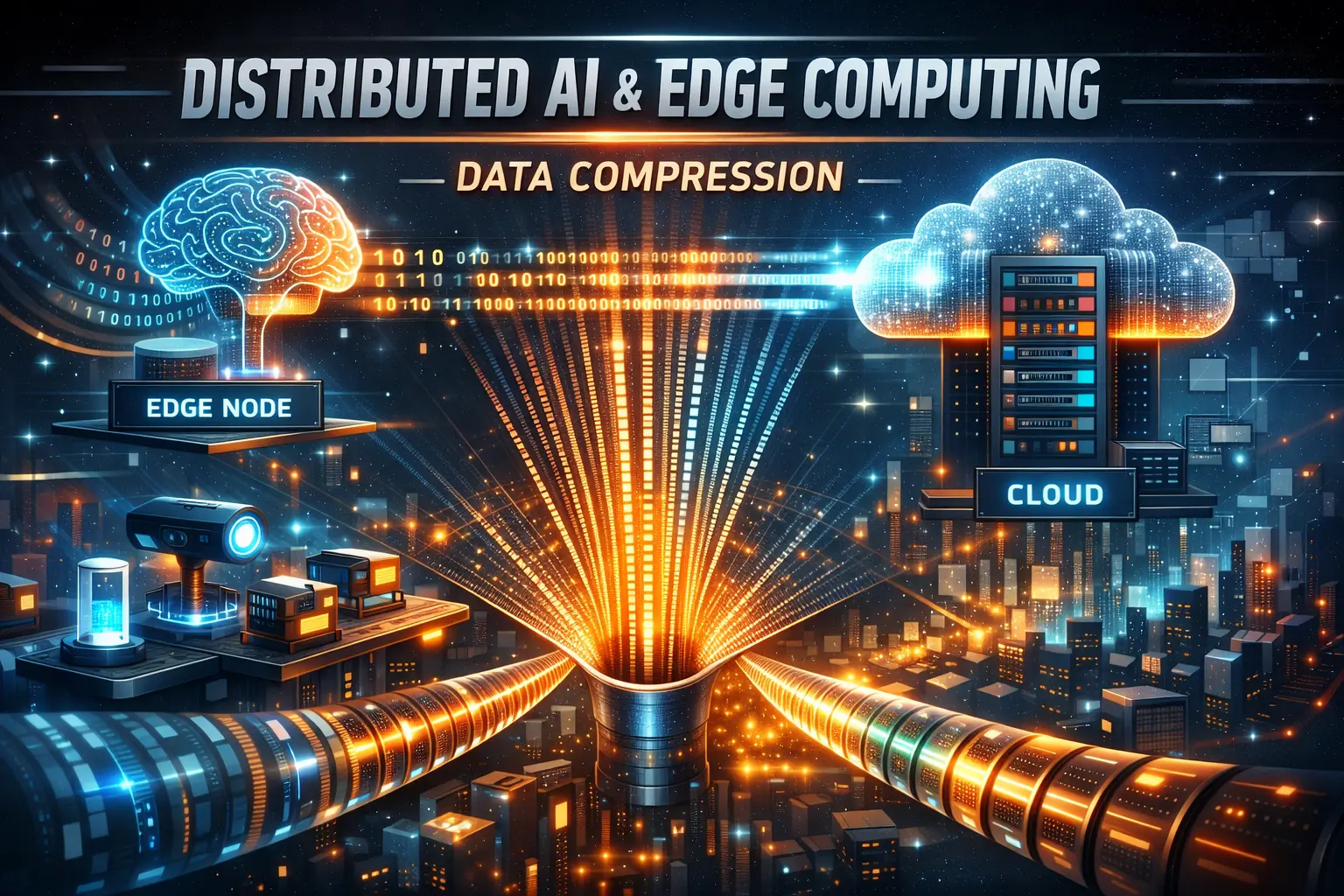
I've been spending a lot of time lately on systems where AI inference runs closer to the data—sensors, cameras, factory floors. The cloud isn't going away, but the way we use it is changing. Here's what I've learned about why distributed AI and edge computing are reshaping how we build real-time systems, and why data compression often ends up being the piece that makes or breaks the whole thing.
The Latency Problem
Everything starts with time. When you're running a model on a camera feed or a sensor stream, round-trip to the cloud kills you. A few hundred milliseconds might be fine for a chatbot; it's useless for anything that has to react in real time.
The numbers tell the story. Cloud inference typically runs in the 1–2 second range for a full round trip. Edge inference? Sub-100ms, often 16–50ms. That's not a small difference—it's the difference between "useful" and "not worth deploying."
Here's how cloud, edge, and hybrid setups compare on data transfer over time:
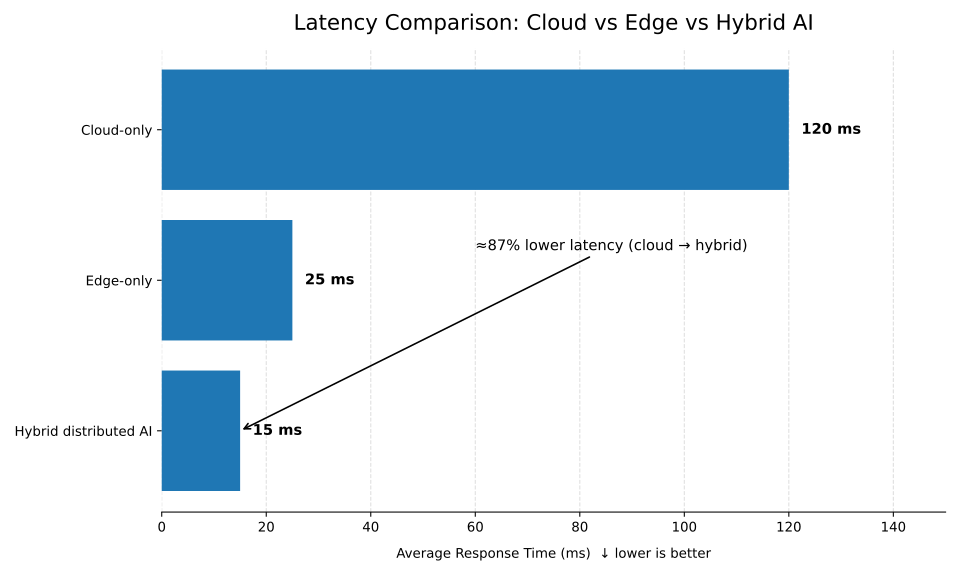
Edge and hybrid architectures cut round-trip time because they process data near the source. Less distance, less delay. Simple as that.
The Hidden Bottleneck: Moving Data
Once you move inference to the edge, you hit the next wall: data distribution. Distributed AI systems move huge amounts of:
- Model weights
- Sensor streams
- Inference results
- Training gradients (if you're doing federated or distributed training)
At scale, bandwidth becomes the real constraint. A single 4K camera can produce 1–2 GB/min. Multiply that by dozens or hundreds of nodes, and shipping everything to the cloud stops being practical—or affordable.
That's where compression comes in. Not as an afterthought, but as a first-class design choice.
Bandwidth Impact of Compression
I ran some tests on typical vision-AI workloads. The difference between uncompressed and compressed streams is stark:
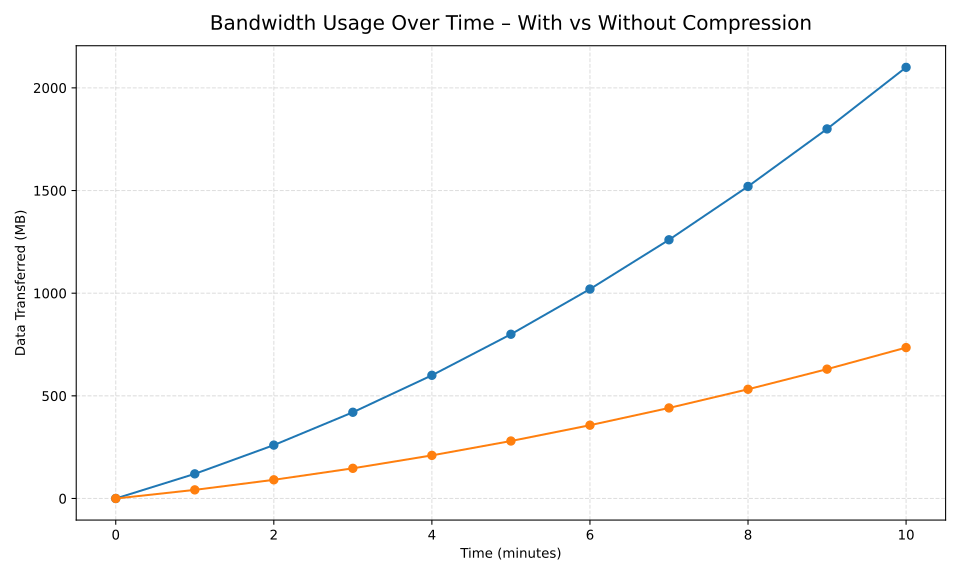
Compression routinely reduces network load by 60% or more. That translates directly into lower costs, faster deployments, and systems that can scale without drowning your links.
Why This Architecture Wins
When you combine:
- Edge computing (inference where the data lives)
- Distributed AI (models and workloads spread across nodes)
- Compression-first design (assume bandwidth is scarce)
You get systems that are:
- Faster – latency stays low
- More resilient – less dependence on a stable cloud link
- Cost-efficient – you're not paying to move petabytes you don't need to move
- Privacy-aware – sensitive data can stay on-device or in-region
The future of AI infrastructure isn't just bigger models. It's smarter distribution. And that means taking compression seriously from day one.
Vanja Sretenović
Software Engineer